

Introduction
When it comes to animal health, the right medicine can make all the difference between recovery and loss. Yet, many farmers and pet owners are unaware of the different options available.
Understanding the Types of Veterinary Medicines helps you make better decisions, improve livestock productivity, and ensure the well-being of animals. Whether you run a dairy farm or care for pets, this guide will simplify everything for you.
Business Email- vetsetlifecare@gmail.com
Phone No- +91 7015507806
What Are Veterinary Medicines?
Veterinary medicines are specialized pharmaceutical products used to prevent, diagnose, and treat diseases in animals.
They are designed for:
- Livestock (cattle, poultry, goats, etc.)
- Companion animals (dogs, cats)
- Exotic animals
These medicines play a vital role in maintaining animal health, productivity, and disease control.
Why Understanding Types of Veterinary Medicines Matters
Knowing the Types of Veterinary Medicines is essential for several reasons:
Key Benefits:
- Helps in choosing the right treatment
- Prevents misuse of drugs
- Improves animal recovery rates
- Boosts farm productivity
Insight:
Studies show that proper use of veterinary medicines can improve livestock productivity by up to 25%.
Business Email- vetsetlifecare@gmail.com
Phone No- +91 7015507806
Main Types of Veterinary Medicines
Let’s break down the most important categories of veterinary medicines in a simple and practical way.
1. Antibiotics
What They Do:
Antibiotics are used to treat bacterial infections in animals.
Common Uses:
- Respiratory infections
- Mastitis in dairy cattle
- Wound infections
Examples:
- Oxytetracycline
- Amoxicillin
Important Tip:
Always use antibiotics under veterinary guidance to avoid resistance.
2. Antiparasitic Medicines (Dewormers)
What They Do:
These medicines eliminate internal and external parasites.
Types:
- Internal parasites (worms)
- External parasites (ticks, mites, fleas)
Benefits:
- Improves digestion
- Enhances growth
- Prevents disease spread
Regular deworming is essential for maintaining Types of Veterinary Medicines effectiveness in livestock care.
3. Vaccines
What They Do:
Vaccines protect animals from infectious diseases by building immunity.
Common Vaccines:
- Foot-and-mouth disease (FMD)
- Rabies
- Brucellosis
Why They Matter:
- Prevent disease outbreaks
- Reduce mortality
- Save treatment costs
Example:
A vaccinated herd is less likely to suffer from major disease outbreaks, ensuring stable productivity.
Business Email- vetsetlifecare@gmail.com
Phone No- +91 7015507806
4. Nutritional Supplements
What They Do:
Supplements provide essential nutrients missing from regular feed.
Types:
- Vitamins
- Minerals
- Calcium supplements
- Protein boosters
Benefits:
- Improves milk production
- Enhances growth
- Strengthens immunity
This category is one of the most commonly used Types of Veterinary Medicines in dairy farming.

5. Anti-inflammatory and Pain Relief Medicines
What They Do:
These medicines reduce pain, swelling, and inflammation.
Uses:
- Injuries
- Post-surgery recovery
- Joint pain
Examples:
- Meloxicam
- Diclofenac (used cautiously)
Business Email- vetsetlifecare@gmail.com
Phone No- +91 7015507806
6. Hormonal Medicines
What They Do:
Hormonal drugs regulate reproductive cycles and improve breeding efficiency.
Uses:
- Estrus synchronization
- Fertility improvement
- Pregnancy management
Widely used in dairy farms to enhance reproductive performance.
7. Antifungal Medicines
What They Do:
Used to treat fungal infections in animals.
Common Issues:
- Skin infections
- Hoof infections
Benefits:
- Prevents infection spread
- Improves animal comfort
8. Disinfectants and Hygiene Products
What They Do:
Maintain cleanliness and prevent disease spread.
Uses:
- Cleaning animal sheds
- Sanitizing equipment
- Treating wounds
Hygiene products are often overlooked but are critical for disease prevention.
Business Email- vetsetlifecare@gmail.com
Phone No- +91 7015507806
9. Feed Additives
What They Do:
Enhance feed quality and improve animal performance.
Types:
- Growth promoters
- Digestive enzymes
- Probiotics
Benefits:
- Better digestion
- Faster growth
- Improved feed efficiency
How to Choose the Right Veterinary Medicine
Choosing the right medicine is crucial for effective treatment.
Follow These Steps:
- Identify the problem or symptoms
- Consult a veterinarian
- Select the appropriate category
- Check dosage and instructions
- Monitor animal response
Using the right Types of Veterinary Medicines ensures faster recovery and better results.
Role of Quality Pharma Companies
The effectiveness of medicines depends on quality and reliability.
Companies like Vetset Lifecare provide:
- High-quality veterinary products
- Wide product range
- Reliable formulations
- Support for distributors and farmers
Business Email- vetsetlifecare@gmail.com
Phone No- +91 7015507806
Common Mistakes to Avoid
Even the best medicines won’t work if used incorrectly.
Avoid These Errors:
- Self-medication without expert advice
- Incorrect dosage
- Skipping vaccination schedules
- Ignoring hygiene practices
Real-World Example
A dairy farmer in Punjab struggled with low milk production. After introducing mineral supplements and regular deworming, milk yield increased by 20% within 3 months.
This highlights how understanding Types of Veterinary Medicines can directly improve farm outcomes.
FAQ Section
1. What are the main types of veterinary medicines?
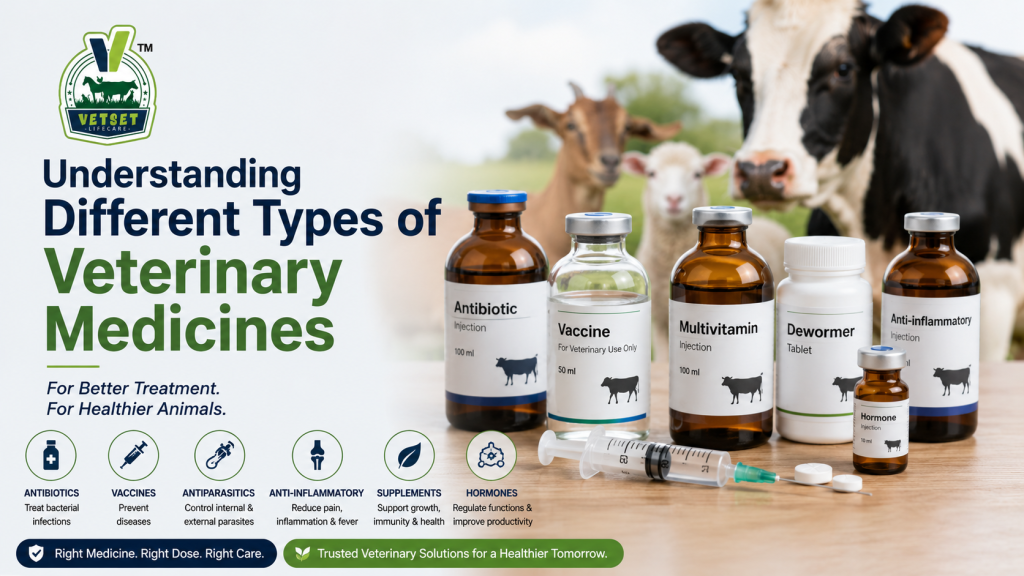
The main types include antibiotics, vaccines, dewormers, supplements, anti-inflammatory drugs, and hormonal medicines.
2. Why are veterinary medicines important?
They help prevent diseases, improve animal health, and increase productivity.
3. Can I use veterinary medicines without a vet?
It is not recommended. Always consult a veterinarian for proper guidance.
4. Which medicines are most commonly used in cattle?
Dewormers, antibiotics, and nutritional supplements are widely used.
5. How do I choose the right medicine?
Identify the issue, consult a vet, and select the appropriate category of medicine.
Conclusion
Understanding the Types of Veterinary Medicines is essential for anyone involved in animal care. From antibiotics to supplements, each category plays a unique role in maintaining animal health and productivity.
By using the right medicines and partnering with trusted companies like Vetset Lifecare, you can ensure better outcomes for your livestock or pets.
Take action today:
Learn, apply, and choose the right veterinary solutions to keep your animals healthy and productive.