

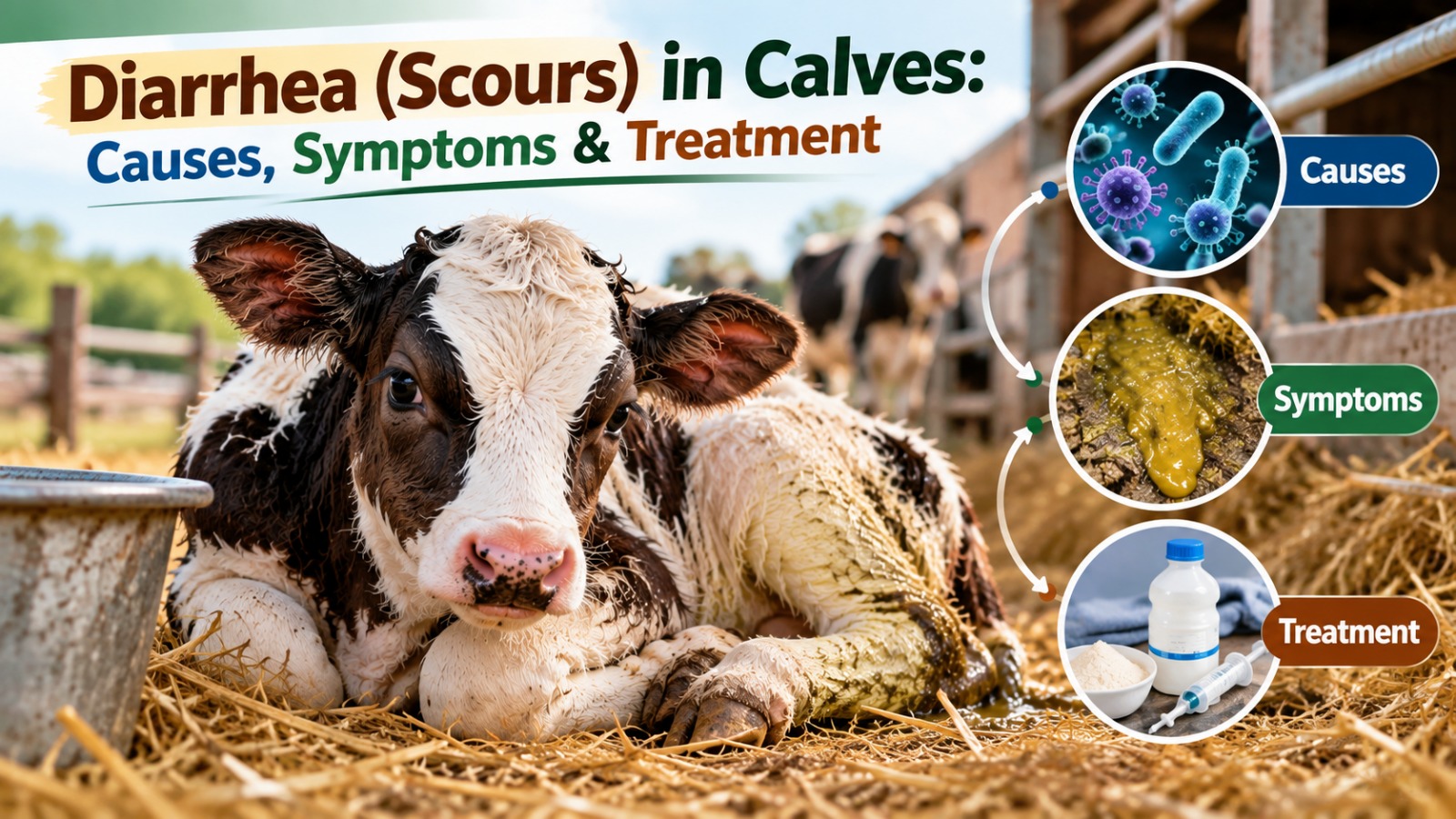
Calf scours (diarrhea) is one of the leading causes of death in young calves, typically caused by viruses (rotavirus, coronavirus), bacteria (E. coli, Salmonella), or parasites (coccidia, cryptosporidia), usually striking in the first one to three weeks of life. The real danger isn’t the diarrhea itself — it’s the rapid dehydration and electrolyte loss that follows, which can kill a calf within one to two days if uncorrected. Treatment centers on oral electrolyte therapy for calves that can still stand and suckle, and urgent veterinary intervention with IV fluids for calves too weak to nurse.
Introduction
Few things cause more anxiety on a dairy or livestock farm than a newborn calf with scours. It can look mild in the morning and be life-threatening by evening — which is exactly why understanding what’s actually happening inside the calf, and what to do about it, matters so much.
This guide covers what causes calf scours, how to recognize the warning signs of dangerous dehydration, and the treatment steps that actually save calves — based on established veterinary extension guidance.
What Is Calf Scours?
Calf scours is the common term for diarrhea in young calves — watery, frequent feces that lead to rapid fluid and electrolyte loss. It isn’t a single disease; it’s a clinical syndrome that can be triggered by several different infectious agents, alone or in combination, though the underlying danger is the same regardless of cause: dehydration and metabolic acidosis.
This is the single most important thing to understand about scours: the diarrhea itself doesn’t kill the calf — the resulting dehydration and acid-base imbalance does, and it can happen fast, sometimes within 24-48 hours.
Causes of Calf Scours
| Category | Common Agents | Typical Age Affected |
|---|---|---|
| Viral | Rotavirus, Coronavirus | 1-3 weeks old |
| Bacterial | E. coli, Salmonella | Usually under 2 weeks old |
| Parasitic | Cryptosporidium, Coccidia | Usually over 2 weeks old |
| Nutritional | Overfeeding, inconsistent milk replacer mixing, sudden diet change | Any age |
Calves can be infected with more than one agent at the same time — for example, rotavirus, coronavirus, and cryptosporidia together — which often makes cases more severe. Infection typically spreads through contact with other calves, contaminated bedding or equipment, or through handlers moving between animals. Newborn calves are especially vulnerable because their own immune system hasn’t fully developed yet — they rely on passive immunity from colostrum in the first days of life, which gradually gives way to their own immune response.
It’s also worth knowing that nutritional scours — caused by overfeeding, inconsistent milk replacer mixing, or abrupt feed changes rather than infection — can cause just as much dehydration as infectious scours, and should be taken just as seriously.
Symptoms of Diarrhea in Calves
- Watery or loose stools, often with a change in colour or odour
- Dirty, soiled tail and hindquarters
- Reduced interest in nursing or drinking milk
- Lethargy and reluctance to stand
- Sunken eyes
- Skin that stays “tented” for more than 1-2 seconds when gently pinched (a key dehydration test)
- Cold mouth or extremities in advanced cases
- Weakness progressing to an inability to stand (recumbency) if untreated
Recognizing Dehydration Severity — Why This Matters Most
A scouring calf loses far more than just loose stool — it can lose 5-12% of its body weight in water through diarrhea. Importantly, a calf can already be around 5% dehydrated while still showing no obvious clinical signs, meaning a scouring calf should be treated as a dehydrated calf, even before visible symptoms of dehydration appear.
| Dehydration Level | Signs | Action Needed |
|---|---|---|
| Mild (~5%) | Diarrhea present, calf still active, no visible dehydration signs | Begin oral electrolytes immediately, continue milk feeding |
| Moderate (~8%) | Sunken eyes, mild skin tenting, calf still standing and able to suckle | Oral electrolyte therapy, monitor closely, consult a vet if not improving |
| Severe (10%+) | Calf down/recumbent, unable to stand or suckle, cold extremities | Emergency veterinary care — IV fluids required, oral treatment is not sufficient |
Treatment of Calf Diarrhea
Step 1: Assess whether the calf can still stand and suckle. This single question determines the entire treatment path.
If the calf can stand and has a suckle reflex:
- Begin oral electrolyte therapy promptly, mixed exactly according to the product’s instructions — using too little water makes the solution too concentrated and can worsen scours.
- Continue offering milk or milk replacer as normal — do not replace a milk feeding with an electrolyte dose. Milk provides essential nutrition the calf needs to recover; electrolytes are given in addition to milk, spaced a couple of hours apart, not instead of it.
- Continue electrolyte support for three to five days, or until the diarrhea resolves, even if the calf seems to be improving sooner.
If the calf is down, too weak to stand, or has stopped suckling:
- This is a veterinary emergency. Oral electrolytes are no longer sufficient at this stage.
- The calf needs intravenous fluid therapy to correct dehydration and metabolic acidosis, administered by a veterinarian.
- Injectable antimicrobials may be used if a bacterial cause is suspected or confirmed, but they do not work against viral causes — a veterinarian’s assessment guides this decision.
A word of caution on “high-energy” electrolyte products: Products with high glucose content can help calves that are refusing milk, but veterinary guidance recommends limiting their use to once or twice, since prolonged use carries a risk of bloat and can worsen diarrhea.
Common Mistakes in Managing Calf Scours
- Waiting to see if it “clears up on its own” — dehydration can escalate within 24-48 hours; early oral electrolyte support is far more effective than late intervention.
- Stopping milk feedings because the calf has diarrhea — this deprives the calf of the nutrition it needs most during recovery. Electrolytes supplement milk, they don’t replace it.
- Mixing electrolyte powder incorrectly — always follow the manufacturer’s water-to-powder ratio exactly; an overly concentrated solution can worsen the problem.
- Relying on oral treatment for a calf that’s already down — once a calf can’t stand or suckle, oral electrolytes alone will not be enough, and delaying veterinary IV treatment reduces survival chances significantly.
- Reaching for antibiotics first — since many common causes are viral, antibiotics alone won’t resolve the underlying infection; correcting fluid and electrolyte loss is the priority treatment in most cases, with antimicrobials reserved for confirmed or strongly suspected bacterial involvement.
Why Scours Is a Leading Cause of Calf Mortality
Neonatal calf diarrhea remains one of the most significant causes of calf death and economic loss in dairy and livestock farming globally, with scours-related causes accounting for a substantial share of overall calf mortality in structured farm studies. The reason it remains so dangerous, despite widely available treatment, usually comes down to timing — calves that receive prompt fluid and electrolyte support have dramatically better outcomes than those where treatment starts only after the calf has already gone down.
Prevention Tips
- Ensure calves receive adequate, high-quality colostrum within the first hours of life — this is the single biggest factor in a calf’s ability to resist early infections.
- Keep calving and calf-housing areas clean and dry to reduce pathogen load.
- Avoid overcrowding and mixing calves of different ages where possible.
- Maintain consistent milk or milk replacer feeding volumes, temperature, and timing — sudden changes can trigger nutritional scours.
- Isolate scouring calves promptly to reduce spread to healthy calves.
FAQs
Q1. What causes diarrhea (scours) in calves?
Calf scours is commonly caused by viruses like rotavirus and coronavirus, bacteria such as E. coli and Salmonella, or parasites like cryptosporidia and coccidia — often striking in the first one to three weeks of life. Non-infectious causes, like overfeeding or inconsistent milk replacer mixing, can be just as damaging.
Q2. What are the symptoms of calf scours?
Key symptoms include watery stools, a soiled tail, reduced nursing interest, lethargy, sunken eyes, and skin that stays “tented” when pinched. As dehydration worsens, calves may become too weak to stand or suckle, which signals a medical emergency.
Q3. What is the treatment for calf diarrhea?
If the calf can still stand and suckle, oral electrolyte therapy alongside continued milk feeding is the standard treatment, typically for three to five days. If the calf is down or has stopped suckling, it needs immediate veterinary care with intravenous fluids — oral treatment alone is not sufficient at that stage.
Q4. How do I know if my calf is dehydrated from scours?
Check for sunken eyes, skin that doesn’t spring back quickly when gently pinched (tenting for more than 1-2 seconds), and overall energy level. Importantly, a calf can be mildly dehydrated even before these signs are obvious, so any scouring calf should be treated as dehydrated from the start.
Q5. Should I stop feeding milk to a calf with diarrhea?
No. Milk or milk replacer should continue as part of the normal feeding routine — it provides essential nutrition the calf needs to recover. Electrolyte solutions are given in addition to milk feedings, not as a replacement for them.
Q6. When should I call a veterinarian for a scouring calf?
Call a veterinarian immediately if the calf is unable to stand, has stopped suckling, shows cold extremities, or isn’t improving within 24 hours of starting oral electrolyte therapy. At that stage, the calf needs intravenous fluids, which cannot be given orally at home.
Sources
- Penn State Extension — Electrolytes for Dairy Calves
- University of Maryland Extension — Troubleshooting Calf Scours
- Illinois Extension — Scours in Beef Cattle
- Oregon State University Extension — Scours in Beef Calves: Causes and Treatments
- Ohio State University Extension — Treat Calf Scours Early with the Right Oral Electrolyte Solution
Related Reading
- Milk Fever in Cows: Causes, Symptoms, Treatment & Prevention
- Mastitis in Cows: Causes, Prevention and Treatment
Need Reliable Electrolyte and Calf Care Products?
VetSet Lifecare manufactures WHO-GMP certified oral rehydration and electrolyte formulations to support calf health during scours recovery. Explore our product range or contact us at +91 70155 07806 for supply and franchise queries.
Disclaimer: This article is for general awareness only. Calf scours can progress quickly and become life-threatening — always consult a veterinarian promptly, especially if the calf becomes weak, stops suckling, or does not improve within 24 hours.