

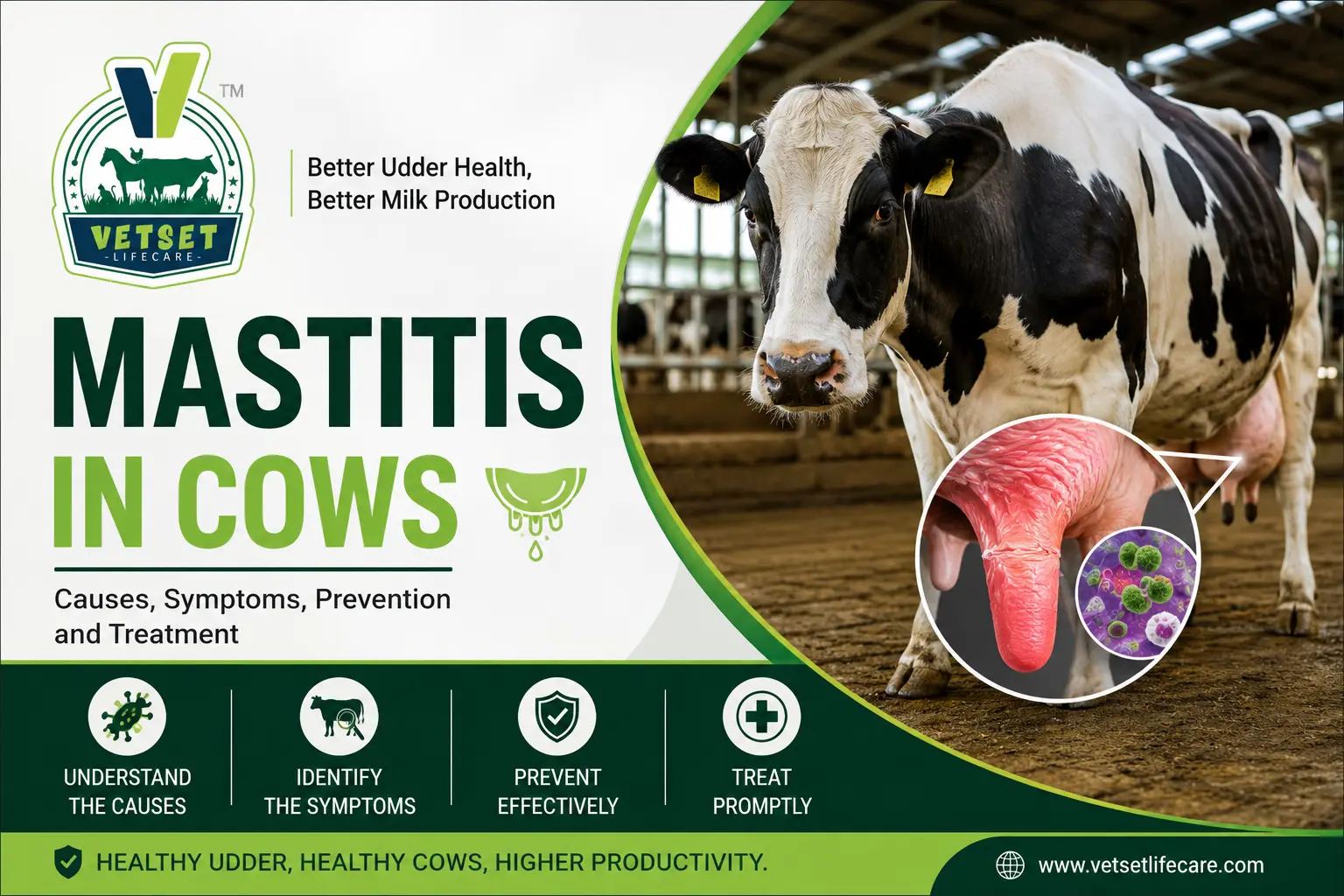
Mastitis in cows is an inflammation of the udder tissue, most commonly caused by bacterial infection entering through the teat canal. It shows up in two forms — clinical mastitis, with visible signs like a swollen, hot udder and abnormal milk, and subclinical mastitis, which has no visible symptoms but causes greater cumulative losses since it goes undetected. In India, subclinical mastitis alone is estimated to account for 70-80% of the total economic losses caused by the disease. Treatment requires veterinary-guided antibiotics, but prevention through milking hygiene and proper housing is far more cost-effective than treating an active infection.
Introduction
Mastitis is one of the costliest diseases in dairy farming — not because any single case is catastrophic, but because it quietly erodes milk yield and quality across a herd, often without a farmer noticing until production has already dropped significantly.
This guide covers what mastitis in cows actually looks like, what causes it, how it’s treated, and — most importantly — the hygiene and management practices that prevent it from taking hold in the first place.
What is Mastitis in Cattle?
Mastitis is an inflammatory reaction of the udder (mammary gland) tissue, typically triggered by bacterial, fungal, or occasionally viral infection, though physical injury or poor hygiene can also cause it. It’s recognised as the disease causing the single greatest economic loss to the dairy industry worldwide.
There are two distinct forms, and understanding the difference matters for both detection and cost:
| Type | Visible Symptoms | Relative Prevalence | Economic Impact |
|---|---|---|---|
| Clinical Mastitis | Yes — swollen udder, abnormal milk, fever | Less common | Significant, but detected and treated early |
| Subclinical Mastitis | No visible signs | 15-40 times more common than clinical | Greater cumulative loss — goes undetected without testing |
In India specifically, subclinical mastitis is estimated to account for 70-80% of the total economic losses attributed to mastitis, precisely because it isn’t visible and often goes untreated for long periods.
Causes of Mastitis in Cows
Bacterial causes — the most common trigger — include organisms such as Staphylococcus aureus, Streptococcus agalactiae, E. coli, Klebsiella species, and several others that enter through the teat canal, particularly when it remains open after milking.
Fungal causes are less common but include species such as Aspergillus fumigatus and Candida.
Non-infectious contributing factors include:
- Physical injury or trauma to the udder
- Poor hygiene in the milking area or bedding
- Incomplete milking, leaving residual milk that supports bacterial growth
- Cows lying down immediately after milking, while the teat canal is still open
- Faulty or poorly maintained milking equipment
Symptoms of Mastitis in Cows
Clinical mastitis is usually easy to spot once you know what to check for:
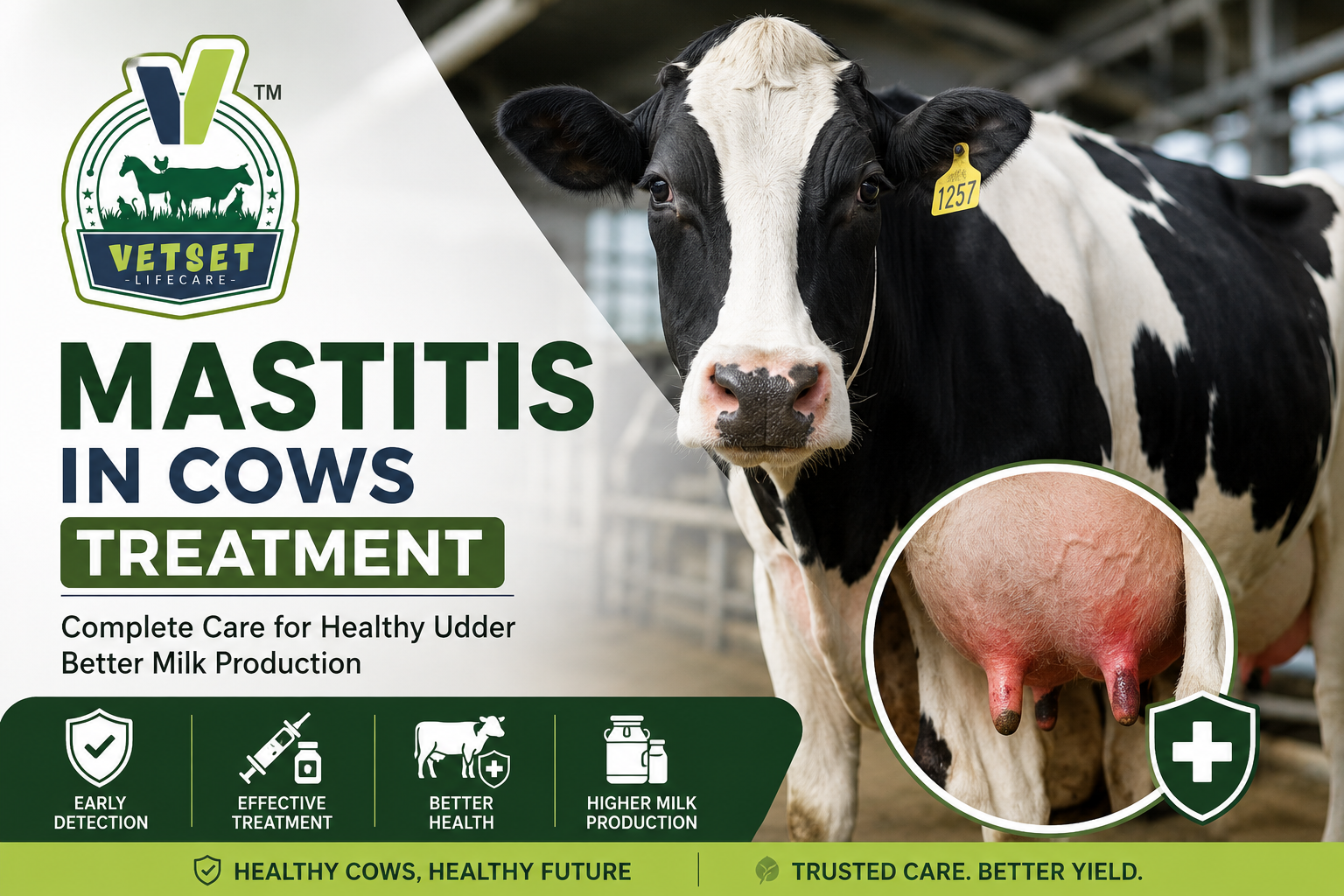
- Udder becomes swollen, hard, hot to the touch, and visibly red
- Pain on touching — the cow may resist being milked or kick out
- Abnormal milk — clots, blood tinge, watery consistency, or a foul odour
- Sudden drop or complete stop in milk yield from the affected quarter
- Fever, reduced appetite, and lethargy in more severe cases
- In advanced or systemic infections: sunken eyes, dehydration, weight loss, and diarrhoea
Subclinical mastitis shows none of the above — the udder looks and feels normal, and milk appears visually unchanged, which is exactly why it causes more cumulative damage. It can only be reliably detected through testing.
How Subclinical Mastitis Is Detected
The California Mastitis Test (CMT) is a simple, low-cost cow-side test that can be performed on a small milk sample to detect subclinical mastitis before visible symptoms appear. Regular CMT screening — especially in higher-yielding animals — allows early intervention before the infection progresses or spreads to unaffected quarters.
Treatment of Mastitis in Cattle
For clinical mastitis:
- Contact a veterinarian immediately — a proper course of antibiotic treatment, selected based on the likely or confirmed causative organism, should begin as soon as possible.
- Strip out infected milk from the affected quarter multiple times a day and dispose of it hygienically (a dilute phenol solution is a commonly used method for safe disposal).
- Milk infected cows last in the milking order, to avoid spreading infection to healthy animals via shared equipment or hands.
- Prevent calves from suckling on an infected teat.
- Permanently dry off a quarter that stops responding to treatment, under veterinary guidance.
For subclinical mastitis, treatment is generally guided by CMT results and may involve targeted antibiotic therapy, often timed around the dry period (dry cow therapy), when treatment is more effective and doesn’t affect saleable milk.
Antibiotic treatment for mastitis should always be administered under veterinary supervision, both to select the correct drug for the causative organism and to observe the required milk withdrawal period before milk can be sold again.
Prevention: Why It Matters More Than Treatment
Because subclinical mastitis causes the majority of economic damage precisely by going unnoticed, prevention-focused management delivers far better returns than relying on treatment after infection sets in.
- Maintain clean, dry bedding — damp, dirty bedding is one of the most common sources of the bacteria that cause mastitis.
- Clean the udder and teats thoroughly before milking, using a separate cloth or paper towel per cow to avoid cross-contamination.
- Ensure teats are completely dry before the milking machine or hand-milking begins.
- Use a germicidal teat dip immediately after milking, while the teat canal is still open.
- Feed cows immediately after milking so they remain standing for 20-30 minutes, giving the teat canal time to close naturally before the cow lies down.
- Maintain and regularly service milking equipment to avoid inconsistent vacuum pressure or damaged liners that can injure teat tissue.
- Run periodic CMT screening, particularly on high-yielding cows, to catch subclinical cases early.
The Real Cost of Ignoring Mastitis
Mastitis isn’t just a lost-milk problem. Left unmanaged, it contributes to:
- Permanent damage to affected udder quarters, reducing future lactation capacity
- Increased culling rates, since chronically infected cows often need to be removed from the herd
- Reduced milk quality (fat, protein, and lactose content) even in cows that continue producing
- Escalation to toxaemia or bacteraemia in severe, untreated cases, which can be fatal
In India, mastitis-related losses run into thousands of crores of rupees annually across the dairy sector — a cost that falls disproportionately on smaller farmers who may not have easy access to routine CMT testing or fast veterinary intervention.
FAQs
Q1. What are the main causes of mastitis in cows?
Mastitis is most commonly caused by bacteria such as Staphylococcus aureus, E. coli, and Streptococcus species entering through the teat canal, often due to poor milking hygiene, damp bedding, or incomplete milking. Physical injury to the udder can also trigger it.
Q2. What are the symptoms of mastitis in cows?
Visible signs include a swollen, hot, and painful udder, abnormal milk (clots, blood, or foul odour), reduced or stopped milk yield, and fever. Subclinical mastitis, however, shows no visible symptoms at all and can only be detected through testing like the California Mastitis Test.
Q3. What is the treatment for mastitis in cows?
Clinical mastitis requires veterinary-guided antibiotic treatment, along with frequent stripping of infected milk and hygienic disposal. Subclinical mastitis is typically treated based on CMT results, often during the dry period. Antibiotics should always be selected and administered under veterinary supervision.
Q4. How can mastitis in cattle be prevented?
Prevention relies on clean, dry bedding, thorough teat cleaning before milking, using a germicidal teat dip after milking, keeping cows standing for 20-30 minutes post-milking, and well-maintained milking equipment. Regular CMT testing helps catch subclinical cases before they cause significant losses.
Q5. Why is subclinical mastitis more damaging than clinical mastitis?
Because it shows no visible symptoms, subclinical mastitis often goes untreated for long periods, causing cumulative milk yield and quality losses across the herd. In India, it’s estimated to account for 70-80% of the total economic losses attributed to mastitis.
Q6. Can mastitis in cows be fatal? In severe or untreated cases, mastitis can progress to toxaemia or bacteraemia, which can be fatal. This is why prompt veterinary attention for clinical cases, and regular screening for subclinical cases, is important rather than waiting to see if symptoms resolve on their own.
Sources
- Cargill Animal Nutrition & Health — Mastitis in Cows: Causes, Symptoms, Prevention and Treatment
- Epidemiology of Bovine Mastitis and Its Diagnosis, Prevention, and Control (IntechOpen)
- Research in Veterinary Science — Economic losses due to mastitis in dairy cattle, India
Related Reading
- Milk Fever in Cows: Causes, Symptoms, Treatment & Prevention
- How to Increase Milk Yield in Dairy Cattle: Feed & Supplement Guide
Need Reliable Mastitis Care Products for Your Herd?
VetSet Lifecare manufactures WHO-GMP certified veterinary formulations, including udder care and antibiotic products, to support dairy herd health. Explore our product range or contact us at +91 70155 07806 for supply and franchise queries.
Disclaimer: This article is for general awareness only. Mastitis treatment requires an accurate diagnosis and appropriate antibiotic selection — always consult a qualified veterinarian rather than self-treating an infected animal.