

Have you ever seen unknown droppings in your backyard, farm, or near your home?
You may wonder:
- Is it a dog?
- A rodent problem?
- Or something dangerous?
Many people ignore it. But that’s a mistake.
Animal droppings identification is very important.
It helps you understand:
- Which animal is present
- Whether there is a health issue
- If there is any risk of disease
This guide will help you identify animal poop easily with simple steps.
What Is Animal Droppings Identification?
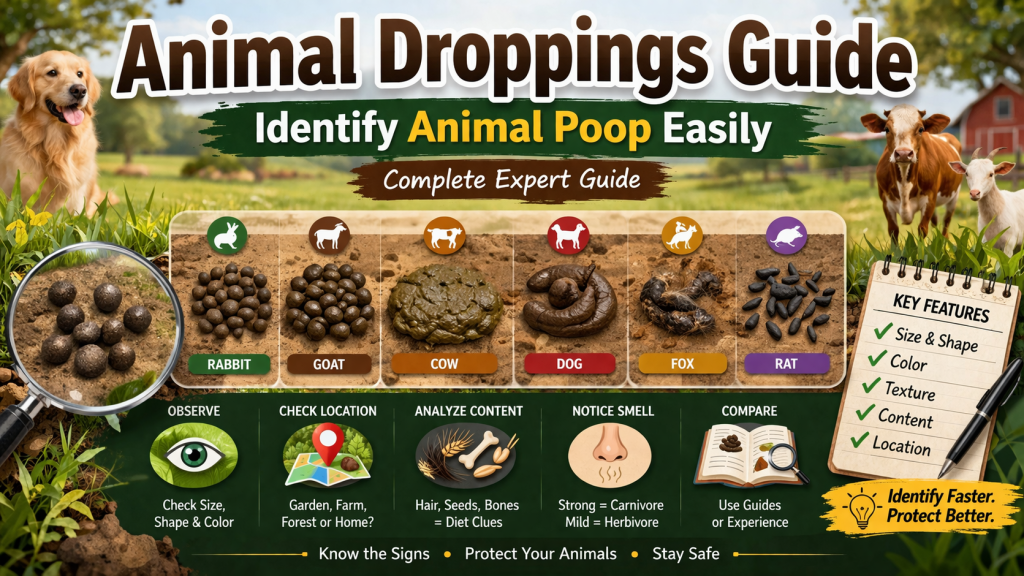
Animal droppings identification means finding out which animal produced the poop by looking at:
- Size
- Shape
- Color
- Texture
- Location
Simple Meaning
Animal droppings = waste released by animals.
Every animal has different poop characteristics.
Business Email- vetsetlifecare@gmail.com
Phone No- +91 7015507806
Why Animal Poop Identification Is Important
1. Detect Health Problems Early
Animal droppings show health signs.
Changes can indicate:
- Parasites
- Infection
- Digestive issues
In veterinary science, poop is often the first sign of illness.
2. Pest Control & Wildlife Tracking
Droppings help you:
- Detect rats or rodents
- Track wild animals
- Prevent infestations
3. Better Farm Management
Farmers use droppings to:
- Monitor livestock health
- Improve feeding plans
- Prevent disease spread
4. Hygiene & Safety
Animal poop can carry:
- Bacteria
- Viruses
- Parasites
Proper identification helps reduce risks.
Key Features to Identify Animal Droppings
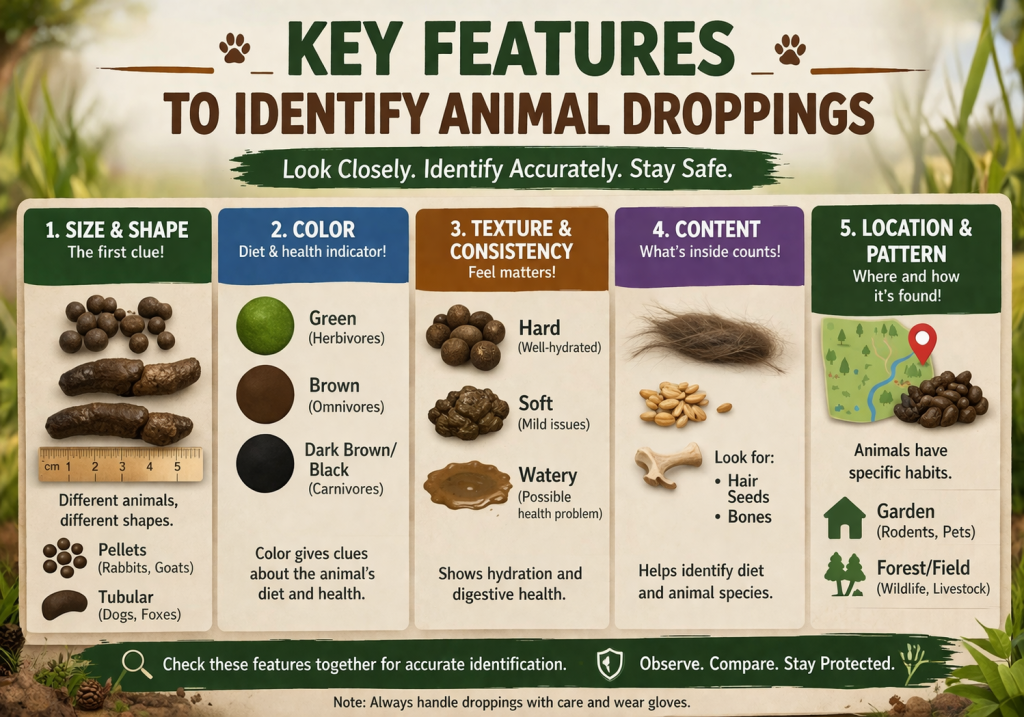
1. Size & Shape
This is the first clue.
Examples:
- Small pellets → Rabbits, goats
- Long tubular → Dogs, foxes
2. Color
Color tells diet and health.
Examples:
- Green → Plant-eating animals
- Dark brown/black → Meat-eating animals
3. Texture & Consistency
Check if poop is:
- Hard
- Soft
- Watery
This shows hydration and digestion.
4. Content
Look inside (carefully):
You may find:
- Hair
- Seeds
- Bones
This helps identify what the animal eats.
5. Location & Pattern
Where you find droppings matters.
Examples:
- Garden → Rodents or pets
- Forest → Wildlife
Business Email- vetsetlifecare@gmail.com
Phone No- +91 7015507806
Types of Animal Droppings
1. Herbivore Droppings
Animals: Cow, goat, rabbit
Features:
- Pellet or semi-solid
- Green or light brown
- Mild smell
2. Carnivore Droppings
Animals: Dog, fox, wild cats
Features:
- Tubular shape
- Strong smell
- Contains hair or bones
3. Omnivore Droppings
Animals: Humans, bears
Features:
- Mixed content
- Variable shape
Business Email- vetsetlifecare@gmail.com
Phone No- +91 7015507806
Step-by-Step: How to Identify Animal Poop
Step 1: Observe Shape
Look carefully at size and form.
Step 2: Check Location
- Backyard → Pets or rodents
- Farm → Livestock
- Jungle/forest → Wildlife
Step 3: Analyze Content
- Seeds → Herbivores
- Hair → Carnivores
Step 4: Notice Smell
- Strong smell → Meat eaters
- Mild smell → Plant eaters
Step 5: Compare Patterns
Use guides or previous experience.
Common Mistakes People Make
Ignoring location
Judging only by size
Not checking diet clues
Guessing without analysis
Important Facts Most People Don’t Know
- Same animal poop can change with diet
- Weather (rain/heat) changes appearance
- Fresh vs old droppings look very different
Benefits of Learning Animal Droppings Identification
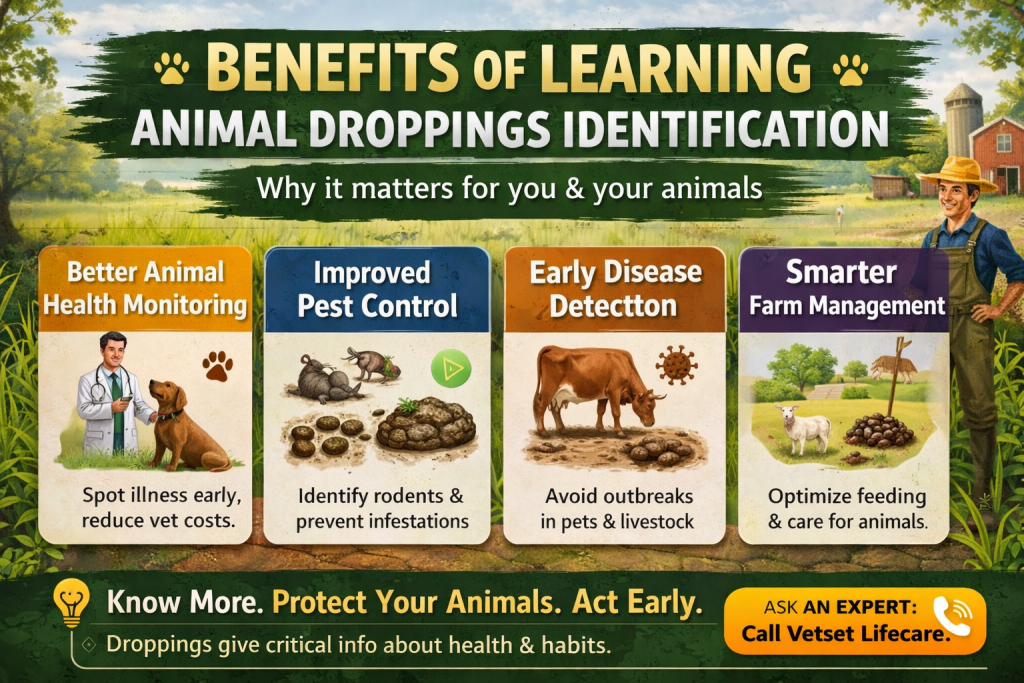
Pros
Early disease detection
Better farm management
Improved pest control
Saves veterinary costs
Cons
Requires observation
Can be unpleasant
Real-Life Example
A farmer notices loose droppings in cows.
He identifies it early → calls a vet → prevents disease spread.
This saves money and animals.
Business Email- vetsetlifecare@gmail.com
Phone No- +91 7015507806
FAQs
1. What are animal droppings?
Animal droppings are waste released by animals, used to identify species and health.
2. How can I identify animal poop?
By checking size, shape, color, texture, and location.
3. Are animal droppings dangerous?
Yes, they may carry bacteria and parasites.
4. What does pellet-shaped poop mean?
It usually indicates herbivores like rabbits or goats.
5. How to identify dog poop?
Dog poop is tubular, soft, and has a strong smell.
6. Can poop show animal disease?
Yes, changes in color or texture indicate health problems.
7. What should I do if I find unknown droppings?
Avoid touching and consult an expert if needed.
8. Are all animal droppings the same?
No, each animal has unique poop characteristics.
9. Why is poop identification important?
It helps in health monitoring, safety, and pest control.
10. Does weather affect droppings?
Yes, rain and heat change their appearance.
Final Verdict
Animal droppings may look small, but they give big information.
If you want to:
- Protect your pets
- Manage your farm better
- Identify pests quickly
- Stay safe from diseases
Then learning animal poop identification is a must.
Need Expert Help?
If you’re unsure about animal droppings or notice unusual changes, don’t ignore it.
Consult professionals or trusted veterinary providers like Vetset Lifecare for proper diagnosis and treatment.
Early action can save your animals and reduce treatment costs.
Business Email- vetsetlifecare@gmail.com
Phone No- +91 7015507806