

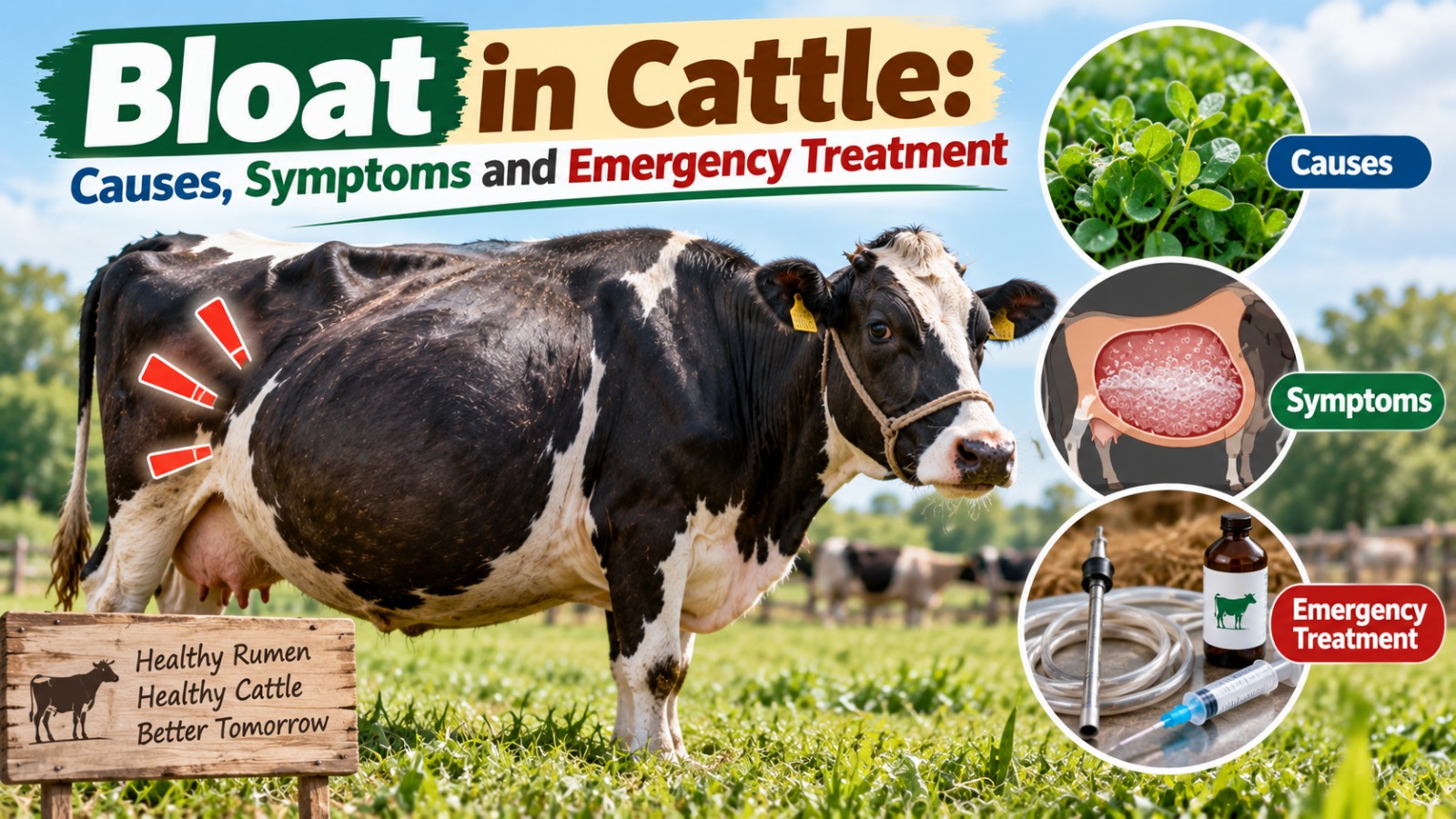
Bloat in cattle is a dangerous overdistension of the rumen caused by trapped fermentation gas, and it can kill an animal within one to four hours if untreated. There are two types: frothy bloat, where gas is trapped in stable foam (common on lush legume pasture or high-grain feedlot diets), and free-gas bloat, where gas simply can’t escape due to a physical blockage. Emergency signs include a visibly swollen left flank, distress, and difficulty breathing. Treatment depends on the type — frothy bloat needs an antifoaming agent, while free-gas bloat needs a stomach tube or trocar to release trapped gas — and in severe cases, emergency intervention is required to save the animal’s life.
Introduction
Bloat is one of the fastest-moving emergencies in cattle farming. An animal can look completely normal in the morning and be in critical distress by afternoon — sometimes cattle are simply found dead, especially when grazing unsupervised.
This guide explains what actually causes bloat, how to recognize it early, the different types, and what emergency treatment looks like — because with bloat, knowing what to do in the first hour genuinely determines whether the animal survives.
What Is Bloat in Cattle?
Bloat (technically called ruminal tympany) is the overdistension of the rumen — the largest chamber of a cow’s stomach — with gases produced during normal fermentation. Cattle normally release this gas by belching (eructation) dozens of times a day. Bloat happens when that gas either gets trapped in a stable foam or physically cannot escape, causing pressure to build rapidly inside the rumen.
This buildup isn’t just uncomfortable — as the rumen expands, it presses on the lungs and major blood vessels, which is what makes severe bloat fatal. According to the MSD Veterinary Manual, death rates can reach as high as 20% in cattle grazing bloat-prone pastures during high-risk periods, and annual bloat mortality in dairy cows can approach 1% in some pastoral regions.
Types of Bloat in Cattle
1. Frothy Bloat (Primary Bloat)
This is the most common type. Gas produced during fermentation gets trapped in a stable foam mixed throughout the rumen contents, rather than collecting as free gas that can be belched out. It’s most associated with:
- Pasture bloat — grazing on lush legume pastures such as alfalfa, clover, and ladino, especially in their early, rapidly growing stage
- Feedlot bloat — cattle on high-grain diets, particularly finely ground grain, most commonly appearing after 1-2 months on a grain-heavy ration
2. Free-Gas Bloat (Secondary Bloat)
Here, gas separates normally from the liquid rumen contents but cannot escape because something is physically blocking the esophagus or interfering with the belching reflex. Common causes include:
- Esophageal obstruction (from foreign objects like potatoes or turnips)
- External pressure on the esophagus from swelling or growths
- Conditions like tetanus or vagal indigestion that interfere with normal eructation
- Cattle lying awkwardly (such as being cast on their back), which can trap gas mechanically
Causes of Bloat in Cattle
- Grazing lush legume pasture — alfalfa, clover, and similar forages digest quickly and release proteins that stabilize foam in the rumen
- Sudden diet changes — abruptly moving cattle onto rich pasture or a high-grain ration without transition time
- High-grain feedlot diets, especially finely ground grain, which is a major contributor to feedlot-type frothy bloat
- Esophageal obstruction from foreign objects lodged in the throat
- Underlying conditions such as hypocalcemia (low blood calcium) or tetanus, which can interfere with the normal belching reflex
- Chronic bloat in young calves up to 6 months old sometimes occurs without an obvious cause and often resolves on its own
Signs of Bloat in Cattle
- Visibly swollen left flank — often the most obvious early sign, sometimes bulging above the level of the backbone
- Skin over the flank appearing tight and taut
- Restlessness, discomfort, or repeated kicking at the belly
- Labored breathing, grunting, and mouth breathing
- Tongue protrusion and extended head/neck posture
- Frequent urination
- In advanced cases: staggering, collapse, and rapid deterioration
In actively monitored dairy cattle, bloat commonly develops within an hour of being turned onto a bloat-risk pasture, though it can also appear on the second or third day of grazing. In unsupervised grazing cattle or feedlot animals, the first sign is sometimes simply finding the animal dead — which is why early recognition in animals you can observe matters so much.
Bloat in Cattle Treatment
This is a true emergency. If you suspect severe bloat, contact a veterinarian immediately — the guidance below is for awareness, not a substitute for professional intervention.
For Frothy Bloat:
- An antifoaming agent is administered directly into the rumen (via stomach tube), commonly vegetable or mineral oil, or a proprietary anti-bloat product
- A stomach tube alone often won’t relieve frothy bloat, since the foam doesn’t release the way free gas does — the antifoaming agent is what breaks down the foam
- The animal needs to be monitored closely for the next hour to confirm the treatment is working
For Free-Gas Bloat:
- Passing a stomach tube or inserting a rumen trocar typically releases the trapped gas immediately and relieves pressure
- If a physical obstruction is the cause, it may need to be located and removed
In Life-Threatening Cases:
- If the animal is in severe distress and standard treatment isn’t working fast enough, an emergency rumenotomy (surgical opening of the rumen) may be necessary to save its life
- This is a veterinary procedure — not something to attempt without professional help
How to Prevent Bloat in Cattle
Prevention is far more reliable than treatment, especially since severe bloat can progress from first signs to death within a few hours.
- Introduce pasture gradually — don’t turn hungry cattle directly onto lush legume pasture; feed hay first to reduce intake
- Ensure hay makes up at least one-third of the diet when grazing bloat-prone pasture — this significantly reduces risk
- Avoid grazing pastures in their early, rapidly growing stage — mature pastures are considerably less likely to cause bloat
- Use strip grazing to control how much lush pasture cattle access at once, moving animals to fresh strips in the afternoon rather than early morning
- For feedlot cattle, ensure rations contain adequate roughage (typically at least 10-15% chopped roughage) and avoid finely ground grain or pelleted rations made from very fine grain
- Consider preventive antifoaming agents during high-risk grazing periods, especially for herds with a history of bloat — this is standard practice in many bloat-prone grazing regions
- Monitor cattle closely during the first few days after any diet change, since this is when risk is highest
When to Call a Veterinarian Immediately
Treat these as emergencies requiring immediate veterinary attention:
- Rapidly swelling left flank with visible distress
- Difficulty breathing or open-mouth breathing
- Animal down or unable to rise
- Any bloat that doesn’t respond quickly to a first attempt at relief
- Repeated bloat episodes in the same animal or multiple animals in a herd, which suggests a pasture or feeding management issue that needs correcting
FAQs
Q1. What are the symptoms of bloat in cattle?
The most visible symptom is a swollen, tight left flank, often accompanied by restlessness, labored breathing, grunting, tongue protrusion, and frequent urination. In severe cases, the animal may stagger, collapse, or die suddenly if the pressure isn’t relieved.
Q2. What causes bloat in cattle?
Frothy bloat is most commonly caused by grazing lush legume pastures like alfalfa and clover, or high-grain feedlot diets, both of which trap fermentation gas in stable foam. Free-gas bloat is caused by physical obstruction of the esophagus or interference with the normal belching reflex.
Q3. How is bloat in cattle treated?
Treatment depends on the type. Frothy bloat requires an antifoaming agent administered into the rumen, while free-gas bloat is typically relieved by passing a stomach tube or inserting a trocar. Severe, life-threatening cases may require emergency surgical intervention (rumenotomy) by a veterinarian.
Q4. How can I prevent bloat in cattle?
Introduce cattle to lush pasture gradually, ensure hay makes up at least a third of the diet when grazing bloat-prone pasture, use strip grazing to control intake, and ensure feedlot rations contain adequate roughage. Preventive antifoaming agents are also commonly used during high-risk grazing periods.
Q5. What are the types of bloat in cattle?
There are two main types: frothy (primary) bloat, where fermentation gas is trapped in a stable foam, and free-gas (secondary) bloat, where gas is present but cannot escape due to a physical obstruction or blockage of the normal belching reflex.
Q6. How quickly can bloat kill a cow?
Bloat can be fatal within one to four hours of the onset of severe symptoms, and in acute cases, death can occur even faster. This is why bloat is treated as a true emergency — delaying veterinary attention significantly reduces the chances of survival.
Sources
- MSD Veterinary Manual — Bloat in Ruminants (Ruminal Tympany), reviewed by Peter D. Constable, BVSc, MS, PhD, DACVIM
- General veterinary references on ruminant digestive disorders
Related Reading
- How to Choose a Veterinary Medicine Company
- Milk Fever in Cows: Causes, Symptoms, Treatment & Prevention
Need Reliable Veterinary Support Products for Your Herd?
VetSet Lifecare manufactures a WHO-GMP certified range of veterinary formulations for cattle and dairy herds. Explore our product range or contact us at +91 70155 07806 for supply and franchise queries.
Disclaimer: This article is for general awareness only and is not a substitute for veterinary diagnosis or treatment. Bloat can be rapidly fatal — always contact a veterinarian immediately if an animal shows signs of bloat.