

Introduction
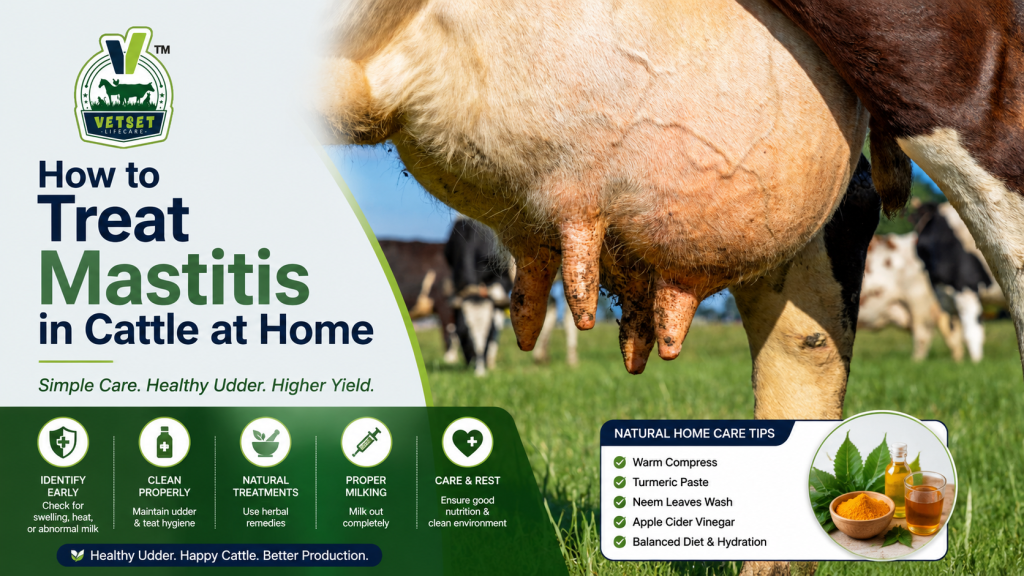
Mastitis is one of the most common and costly diseases in dairy farming—and it can quietly reduce your milk production without warning. Many farmers only notice it when the damage is already done.
The good news? With the right knowledge, mastitis treatment in cows can be managed effectively at home, especially in early stages. In this guide, you’ll learn practical solutions, proven remedies, and expert tips to keep your cattle healthy and productive.
What is Mastitis in Cows?
Mastitis is an inflammation of the udder tissue, usually caused by bacterial infection. It affects milk quality, reduces yield, and can cause serious discomfort to the animal.
Common Causes:
- Poor hygiene during milking
- Bacterial infections
- Injury to the udder
- Improper milking techniques
Early detection is key to successful mastitis treatment in cows.
Business Email- vetsetlifecare@gmail.com
Phone No- +91 7015507806
Symptoms of Mastitis You Should Never Ignore
Recognizing symptoms early can prevent severe damage.
Visible Signs:
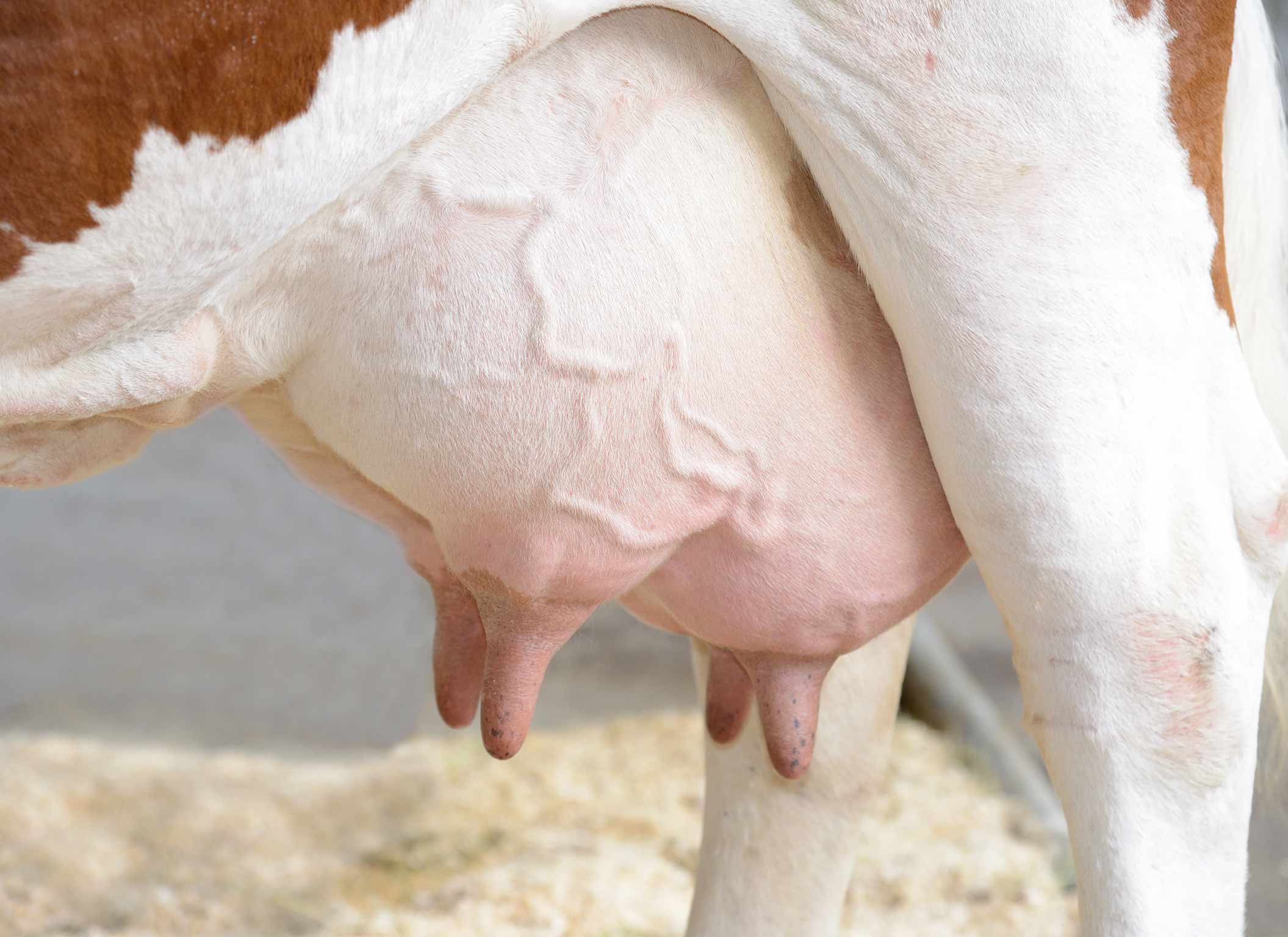
- Swollen or hard udder
- Redness or heat in the teat
- Pain during milking
- Clots or flakes in milk
Behavioral Changes:
- Reduced appetite
- Decreased milk production
- Restlessness
If symptoms worsen, consult a veterinarian immediately.
Why Early Treatment is Important
Delaying treatment can lead to:
- Permanent udder damage
- Significant milk loss
- Spread of infection to other cows
Studies show that untreated mastitis can reduce milk yield by up to 30%.
Mastitis Treatment in Cows at Home
If detected early, you can start mastitis treatment in cows at home using simple and effective methods.
1. Maintain Proper Udder Hygiene
Cleanliness is the first step in controlling infection.
What to Do:
- Wash the udder with warm water before and after milking
- Use a clean cloth for each cow
- Dry the udder properly
Clean conditions prevent bacteria from spreading.
2. Frequent Milking
Regular milking helps remove infected milk.
Benefits:
- Reduces bacterial load
- Relieves pressure in the udder
- Speeds up recovery
Milk the affected cow 3–4 times a day for best results.
Business Email- vetsetlifecare@gmail.com
Phone No- +91 7015507806
3. Use Warm Compress Therapy
A simple yet powerful remedy.
How to Apply:
- Dip a cloth in warm water
- Apply to the affected udder for 10–15 minutes
- Repeat 2–3 times daily
This improves blood circulation and supports healing.
4. Natural Home Remedies for Mastitis Cattle
Many farmers use traditional remedies alongside basic care.
Popular Home Remedies:
- Turmeric Paste:
Mix turmeric with water and apply externally to reduce inflammation - Aloe Vera Gel:
Helps soothe swelling and promote healing - Garlic Extract:
Known for antibacterial properties
These home remedies for mastitis cattle can support recovery in mild cases.
5. Proper Nutrition and Hydration
A healthy cow recovers faster.
Diet Tips:
- Provide high-quality green fodder
- Add mineral mixtures
- Ensure clean drinking water
Good nutrition strengthens immunity and supports mastitis treatment in cows.
6. Use Veterinary Medicines When Needed
Home remedies work best in early stages. For moderate to severe cases, medicines are necessary.
Common Treatments:
- Antibiotics
- Anti-inflammatory drugs
- Teat sealants
Trusted companies like Vetset Lifecare offer high-quality veterinary solutions for effective dairy cow udder infection treatment.3
Business Email- vetsetlifecare@gmail.com
Phone No- +91 7015507806
7. Isolate Infected Animals
Prevent the spread of infection.
Best Practices:
- Keep infected cows separate
- Use separate milking equipment
- Maintain strict hygiene
Prevention Tips for Mastitis
Prevention is always better than cure.
Follow These Steps:
- Maintain clean milking environment
- Use proper milking techniques
- Disinfect teats after milking
- Regularly check udder health
- Follow vaccination schedules
Preventive care reduces the need for frequent mastitis treatment in cows.
Business Email- vetsetlifecare@gmail.com
Phone No- +91 7015507806
Real-World Example
A dairy farmer in Haryana noticed early signs of mastitis in one of his cows. By:
- Increasing milking frequency
- Using warm compress
- Improving hygiene
He managed to control the infection within a week without major losses.
This shows how early action can make a big difference.
Common Mistakes to Avoid
Avoid these errors during treatment:
- Ignoring early symptoms
- Using dirty cloths or tools
- Over-relying only on home remedies
- Not consulting a vet when needed
Proper balance between home care and medical support ensures effective mastitis treatment in cows.
Business Email- vetsetlifecare@gmail.com
Phone No- +91 7015507806
FAQ Section (Featured Snippet Optimized)
1. What is the best mastitis treatment in cows at home?
Proper hygiene, frequent milking, warm compress, and natural remedies like turmeric can help in early stages.
2. Can mastitis be cured without antibiotics?
Mild cases can be managed with home care, but severe infections require antibiotics.
3. How long does mastitis take to heal?
It can take 5–10 days depending on severity and treatment.
4. What are common home remedies for mastitis cattle?
Turmeric paste, aloe vera, and garlic extract are commonly used remedies.
5. How can mastitis be prevented?
Maintain hygiene, follow proper milking practices, and monitor udder health regularly.
Business Email- vetsetlifecare@gmail.com
Phone No- +91 7015507806
Conclusion
Mastitis can be a serious challenge, but with early detection and proper care, it can be managed effectively. Simple practices like hygiene, nutrition, and timely treatment go a long way in protecting your livestock.
By combining home remedies for mastitis cattle with trusted veterinary solutions from Vetset Lifecare, you can ensure faster recovery and better milk production.
Take action today:
Monitor your cattle regularly, act early, and provide the care they need to stay healthy and productive.