


Puppies should be dewormed starting at 2 weeks of age, repeated every 2 weeks until 12 weeks old, then monthly until 6 months. Adult dogs typically need deworming every 3 months, though dogs with higher exposure — outdoor dogs, farm dogs, or those around other animals — may need monthly deworming. Indoor dogs can still get worms through fleas, contaminated food, or environmental exposure, so deworming should never be skipped entirely.
Introduction
“How often should I deworm my dog?” is one of the most common questions dog owners ask, and getting it wrong in either direction causes problems — deworming too rarely leaves parasites to cause real harm, while deworming unnecessarily often provides no added benefit and adds needless cost.
Roundworms, hookworms, and tapeworms are common even in dogs that appear perfectly healthy, since many worm infections don’t show obvious symptoms until the parasite load becomes significant. In India’s warm climate, with frequent outdoor exposure and contact with stray animals, the risk is higher than in many other regions — which is exactly why a proper, consistent deworming schedule matters.
What Is Dog Deworming?
Dog deworming is the process of eliminating internal parasites using medication formulated to kill worms and allow the body to expel them, typically through stool. Regular deworming also helps prevent reinfection and supports better digestion and nutrient absorption overall.
Common Worms in Dogs
- Roundworms — among the most common, especially in puppies
- Hookworms — can cause anemia in severe infestations
- Tapeworms — often linked to flea exposure
- Whipworms — can cause chronic digestive issues
These parasites can live inside a dog for extended periods without producing obvious symptoms, which is part of why a preventive schedule matters more than waiting for visible signs.
Why Deworming Matters
Prevents health problems. Untreated worm infestations can cause weakness, weight loss, and chronic diarrhea, and in puppies, can seriously affect growth and development.
Protects human health. Certain worms found in dogs, including roundworms and hookworms, can transmit to humans — children are particularly at risk due to closer contact with pets and less consistent hygiene habits.
Supports healthy puppy growth. A proper puppy deworming schedule helps ensure normal growth and stronger immune development during a critical early-life window.
Improves digestion. Removing worms improves nutrient absorption and overall gut health, which is part of why dewormed dogs often show improved coat condition and energy.
Deworming Schedule for Dogs
Puppies
- 2 weeks old: First deworming dose
- Every 2 weeks until 12 weeks: Continue treatment
- Monthly from 12 weeks to 6 months: Ongoing schedule as the immune system develops
Adult Dogs
- Standard schedule: Every 3 months
- Higher-risk dogs: Monthly deworming may be advised
Schedule by Lifestyle
| Lifestyle | Recommended Frequency |
|---|---|
| Indoor dogs | Every 3-6 months |
| Outdoor dogs | Every 1-3 months |
| Farm dogs | Monthly |
When to Give a Deworming Dose
- Typically given in the morning with food, to reduce the chance of stomach upset
- Dosage should always be based on the dog’s current body weight, not estimated
- Follow veterinary advice for dogs with existing health conditions or those on other medications
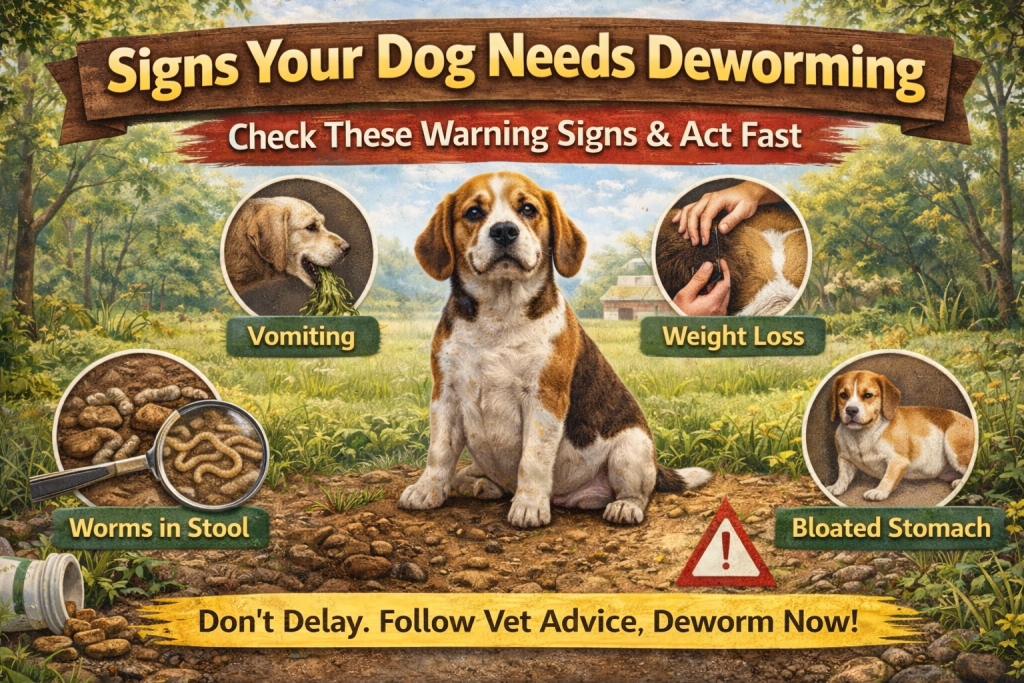
Signs Your Dog May Need Deworming
- Vomiting
- Visible worms or worm segments in stool
- Unexplained weight loss
- A bloated or swollen stomach
If you notice any of these signs, arrange deworming treatment rather than waiting to see if it resolves on its own.
Types of Deworming Treatments
Tablets — effective and widely used, though some dogs are difficult to medicate directly and may need the tablet hidden in food.
Syrups — often preferred for puppies due to easier dosing, though they typically have a shorter shelf life once opened.
Chewables — easy to administer since most dogs accept them readily, though they can be somewhat more expensive than tablets.
What to Look for When Choosing a Deworming Product
- Spectrum — choose a product effective against multiple worm types rather than a single-target treatment
- Dosage accuracy — always dose according to your dog’s actual current weight
- Safety profile — check for veterinary approval and be aware of possible side effects
- Ease of administration — pick a format your dog will actually accept
- Frequency requirements — some products are formulated for monthly use, others for quarterly dosing
Possible Side Effects of Deworming
Common and usually temporary: mild diarrhea, vomiting, or low energy for a day or two after treatment.
Rare: allergic reactions — if you notice unusual symptoms after dosing, contact a veterinarian.
Common Mistakes to Avoid
- Skipping scheduled doses
- Estimating dosage instead of weighing the dog
- Ignoring visible symptoms and delaying treatment
- Assuming an indoor dog doesn’t need regular deworming
Facts Many Owners Don’t Know
- Indoor dogs can still get worms — through fleas, contaminated food, or contact with other pets
- Fleas are a common source of tapeworm infection, so flea control and deworming go hand in hand
- Deworming is an ongoing process, not a one-time treatment — reinfection is common without a consistent schedule
Why Consistent Deworming Is Worth It
A regular deworming schedule reduces veterinary costs over time, prevents more serious parasite-related disease, and supports a longer, healthier life for your dog — all for a relatively small, predictable recurring cost.
FAQs
Q1. How often should I deworm my dog in India?
Adult dogs typically need deworming every 3 months, while high-risk dogs — those with frequent outdoor exposure or contact with other animals — may need monthly treatment. Puppies follow a more frequent early schedule.
Q2. What is the puppy deworming schedule?
Start deworming at 2 weeks of age, repeat every 2 weeks until 12 weeks old, then switch to monthly treatment until the puppy reaches 6 months.
Q3. When should I give a deworming tablet to my dog?
Typically in the morning with food, dosed according to the dog’s current body weight. Follow veterinary guidance for dogs with existing health conditions.
Q4. Can indoor dogs get worms?
Yes. Indoor dogs can still contract worms through fleas, contaminated food, or general environmental exposure, which is why regular deworming is recommended regardless of lifestyle.
Q5. What are the signs of worms in dogs?
Common signs include vomiting, visible worms or segments in stool, unexplained weight loss, and a bloated stomach.
Q6. Are there side effects of deworming?
Mild, temporary side effects like diarrhea or vomiting can occur. Allergic reactions are rare but possible — contact a veterinarian if unusual symptoms appear after treatment.
Q7. Can humans get worms from dogs?
Yes, certain worms such as roundworms and hookworms can transmit to humans, with children at higher risk due to closer contact. Good hygiene practices alongside regular deworming reduce this risk.
Q8. How long does deworming medication take to work?
Most deworming treatments begin working within 24-72 hours, though full parasite clearance and symptom improvement may take a few days longer depending on the infestation level.
Related Reading
Trusted Veterinary Products for Your Pet
VetSet Lifecare manufactures WHO-GMP certified veterinary formulations for pets and livestock alike. For deworming products and veterinary supplies, contact us at +91 70155 07806 or vetsetlifecare@gmail.com.
Disclaimer: This article is for general awareness only. Always consult a veterinarian before starting or changing a deworming schedule, particularly for puppies, pregnant dogs, or animals with existing health conditions.